


A Graphmatech-Aveo JV
3D Printing Graphene Featured Filaments3D Printing Graphene Featured Filaments
Aveo has developed in investment partnerships with many materials technology collaborations to develop some nonpareil world-first products in both composites and now Aveo Carbon5D™ 3d Printing filaments with outstanding special characteristics such as:
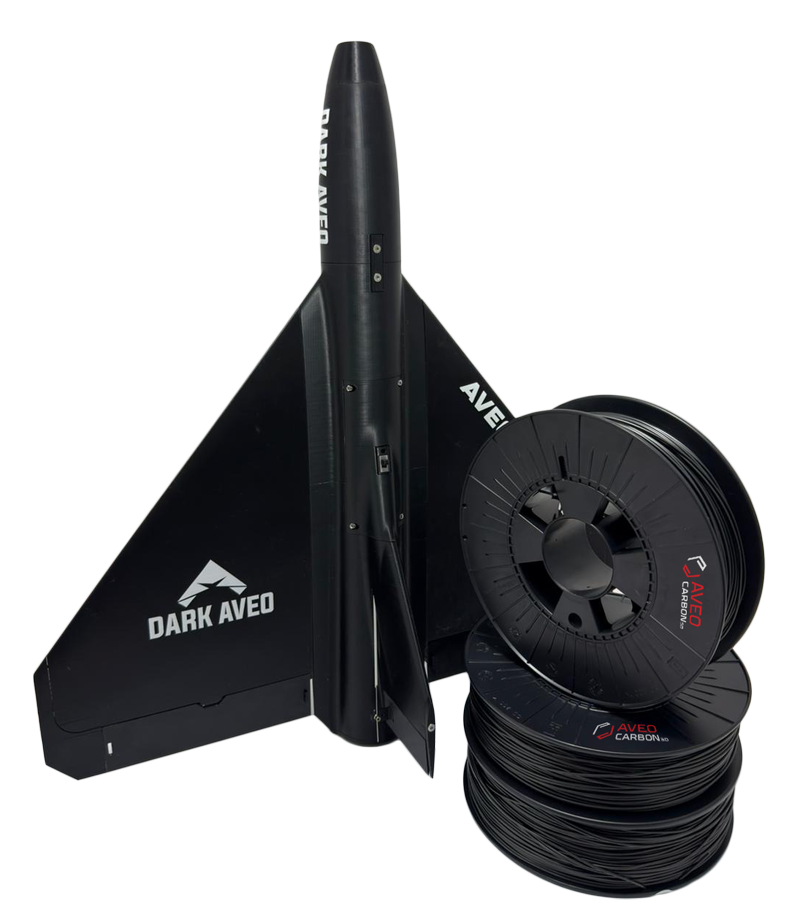
- Up to 120% higher printing speed compared to existing industry filaments
- Total reduction in nozzle wear due to the smooth graphene enhanced materials
- Elimination of “stringing
- Up to 99.7% RAM (radar absorbing material) signature reduction
- Tuneable ESD and EMI masking to match the frequencies required
- Customized physical properties such as Tensile Strength, elasticity, thermal etc etc on request
Here you see some sample prints, the finish is unmatched by any industry standard filament.
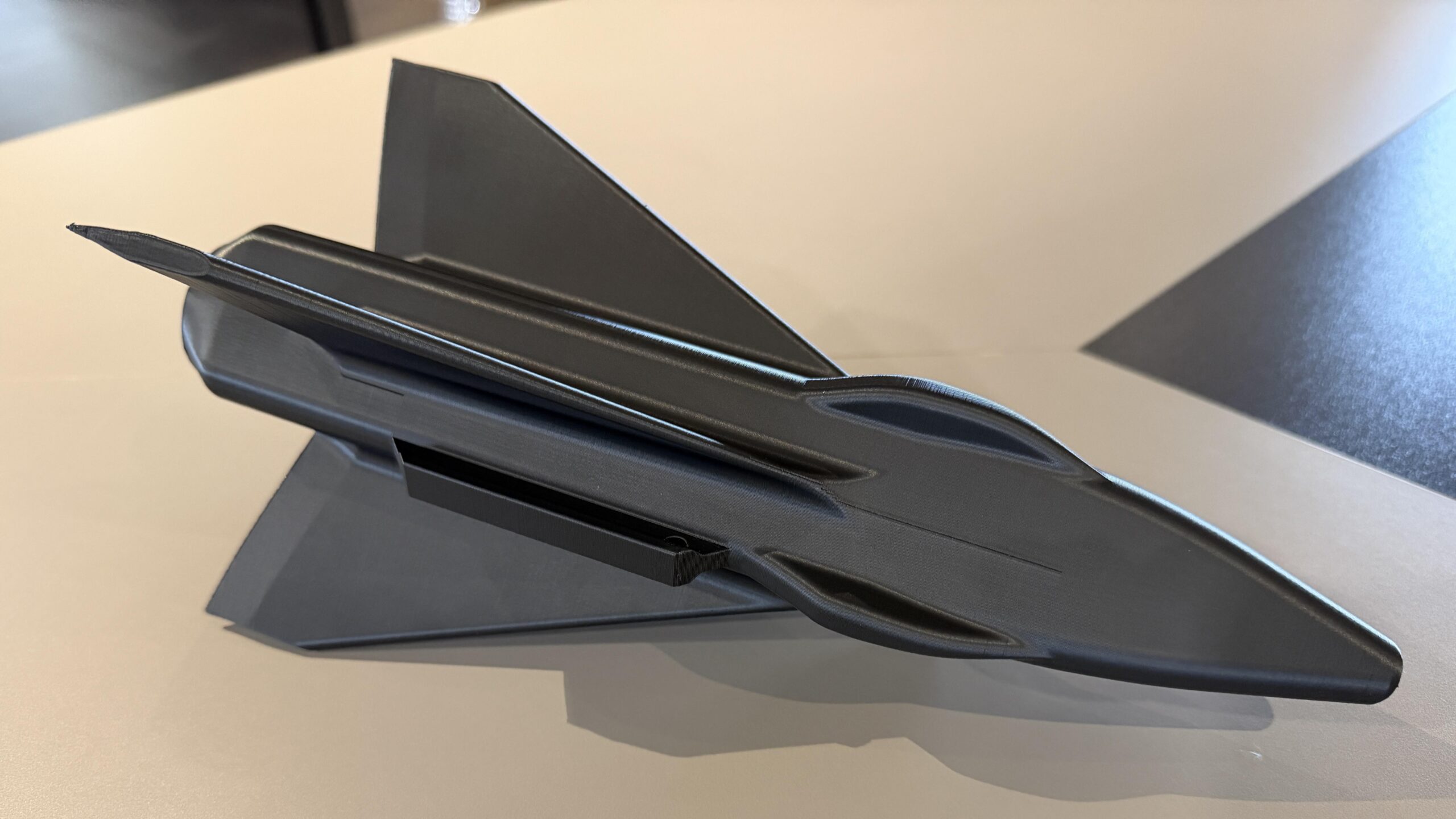
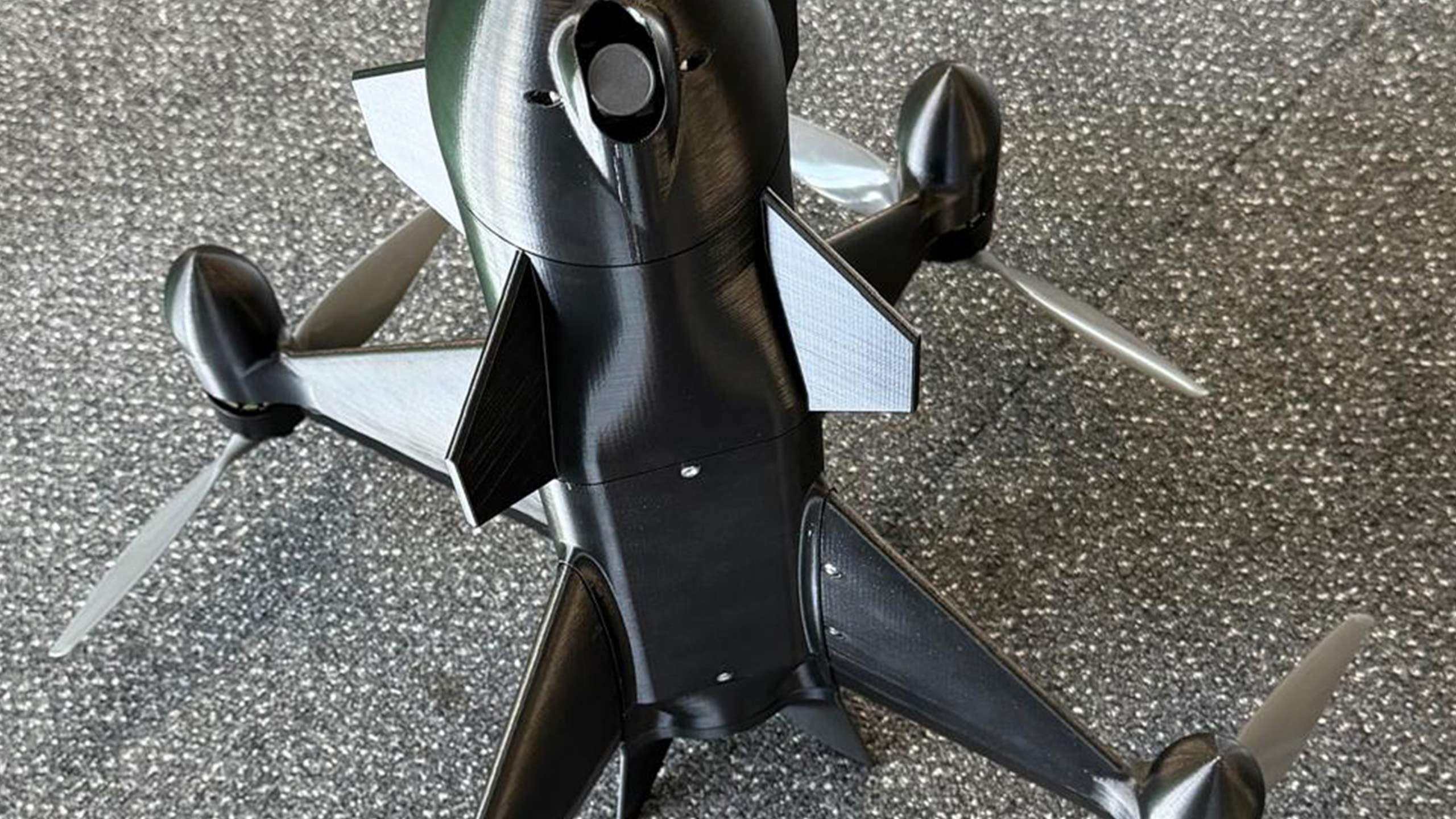
Aveo Carbon5D™ is available in different blends as stated but also in stock filaments used by Aveo in all its defense 3D printed parts and products, including:
PET-G
Isotropic ESD-Safe
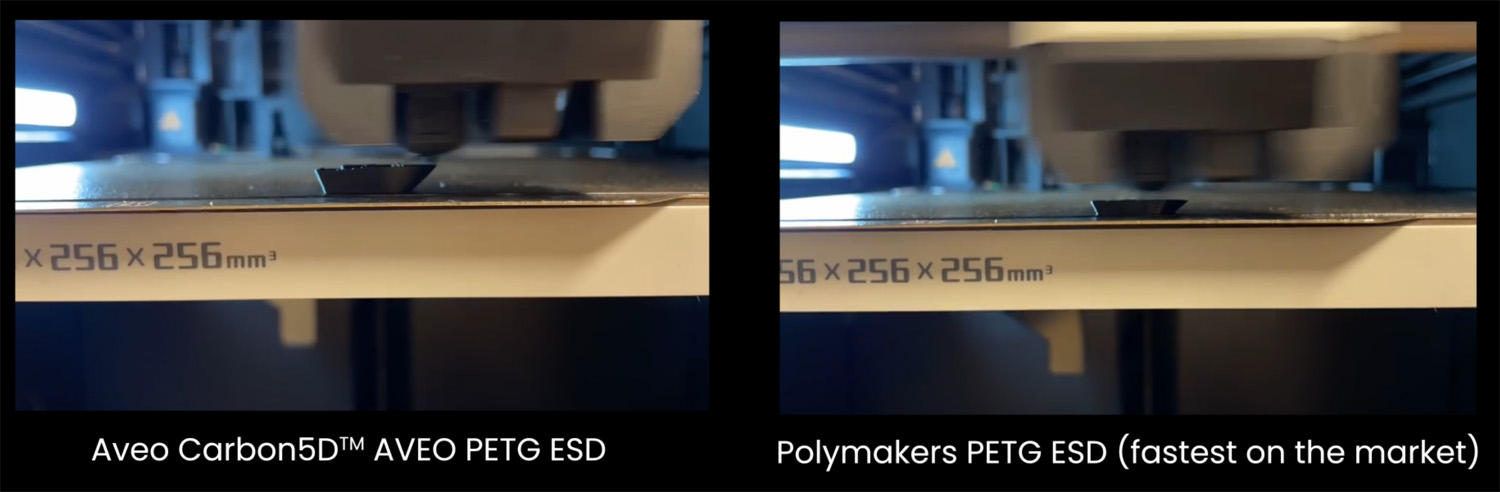
An engineered conductive PET-G designed for controlled electrostatic discharge. Material features tunable surface and volume conductivity achieved with minimal graphene loading. In comparison to carbon-filled systems, this Aveo filament significantly reduces mechanical strength compromise, better melt behavior, and much higher print speed sucha s 150 mm/s. It also has moderate level of RAM characteristics.
AVEO PET-G ESD offers:
- Print speeds 20–120% faster than comparable conductive PET-G ESD materials
- No warping, stringing, clogging, or abrasive wear on nozzle
- Stable extrusion and strong interlayer adhesion
The material is developed specifically for:
- ESD-safe housings for sensitive electronics
- Jigs, fixtures, and assembly tools in electronics production
- Test equipment and laboratory components
- Custom enclosures used in ESD-protected areas (EPA)
- Replacement parts where electrostatic protection is critical
FDM Filaments
- Aveo PET-G ESD
Pellets
- PET-G MB
- PET-G ESD 104
- PET-G ESD 106
- PET-G ESD 108
Aveo ASA Reinforced
Aveo ASA is a graphene-reinforced FDM filament engineered for structural components used in ambient and outdoor environments. The formulation enhances tensile modulus and strength compared to neat ASA while also enabling faster print speeds and stable melt flow. Unlike heavily filled fiber-reinforced materials, Aveo ASA maintains smooth extrusion without excessive brittleness, warping, or nozzle wear. Compared to standard ASA, the material supports higher throughput while preserving dimensional stability and mechanical integrity.
Aveo ASA delivers:
- Increased stiffness and tensile strength
- Faster printing compared to neat ASA
- Stable flow and reliable layer adhesion
- Isotropic mechanical performance across print orientations
- No warping, stringing, or nozzle clogging
With the UV resistance and weather durability of ASA, the material is well-suited for:
- Outdoor components
- Structural housings
- Brackets and fixtures
- Construction-related parts
- Functional end-use components in ambient conditions
FDM Filaments
- ASA Reinforced
- ASA Reinforced GN
Pellets
- ASA MB
- ASA Reinforced (pellets)
- ASA Reinforced GN (pellets)
- ASA ESD (pellets)
Aveo PVDF
Electrically Conductive & Flexible ESD
Aveo PVDF grades combine functional electrical conductivity with mechanical flexibility and chemical resistance. Designed for electrically active components and static-safe structures, the material enables both conductive and ESD-safe applications in demanding environments. Superior chemical resistance and also RAM/EMI Shielding charateristics.
Provides controlled surface resistivity within the ESD-safe range while maintaining flexibility and high impact resistance — ideal for components requiring static protection without brittle behavior.
PVDF Conductive delivers printed-part conductivity in the range of 10–20 S/m, enabling:
- Integrated resistive heating
- De-icing systems
- Electrically active housings
- Lightweight conductive structures
Advantages of PVDF:
- Excellent chemical resistance
- High thermal stability
- Inherent flame resistance
- Long-term durability in harsh environments
FDM Filaments
- PVDF Conductive
- PVDF ESD
- PVDF Reinforced
Pellets
- PVDF MB
- APVDF Conductive (pellets)
- PVDF ESD (pellets)
- PVDF Reinforced (pellets)
Aveo PPS High-temperature ESD
filament for Demanding Environments
Aveo PPS ESD is a graphene-engineered high-temperature filament designed for reliable electrostatic discharge control in environments where conventional ESD materials fail. Based on polyphenylene sulfide (PPS), it combines structural strength, inherent flame resistance, and thermal stability up to 250 °C.
Aveo PPS ESD delivers:
- Surface resistivity in ESD-safe range
- Maximum service temperature up to 250 °C
- High stiffness and dimensional stability
- Inherently flame-retardant PPS base polymer
- Chemical resistance to fuels, oils and solvents
Suitable for high-temperature ESD tooling, curing fixtures, burn-in holders, and electronics processing jigs where both thermal stability and static control are critical. For applications requiring higher electrical conductivity, PPS Conductive provides stable bulk conductivity while retaining the thermal and mechanical advantages of PPS. Ideal for electrically functional components, grounding features, and high-temperature conductive housings exposed to demanding industrial conditions. Great for EMI shielding and RAM. Both grades are intended for high-temperature FDM systems with controlled chamber environments.
FDM Filaments
- PVDF Conductive
- PVDF ESD
- PVDF Reinforced
Pellets
- PPS MB
- PPS ESD (pellets)
- PPS Reinforced (pellets)
- PPS Conductive (pellets)
Aveo Hybrid Composites for Radar, EMI, ESD MaskingAveo Hybrid Composites for Radar, EMI, ESD Masking
Aveo composites R&D was possible due to our work on airframe composites for more than 13 years to date… e.g. General Atomics predator winglets 100% developed and manufactured to this day. Aveo began to experiment and develop flax natural composites and graphene blends 6 years ago. Other proprietary synthetic ingredients, natural ingredients and natural and polymer/glass fibers have gone into the mix along with CNT’s and nanocoatings developed by Aveo and its small technological partners that Aveo has invested in.
We have worked to perfect our technology to be applied to 3D printing. Through our vendors, we have assembled together the pieces of the puzzle to make the same characteristic component parts via additive manufacturing. These components are designed to Aveo specifications and proprietary ingredients, processes, and end materials; the same that Aveo has applied to its products for defense, space, aeronautical, marine, and vehicle markets.
Since 2013 Aveo Group has been investing in research and development of alternative composite fabrics and resins. Aveo has now achieved its goals and has been delivering commercial versions of our exceptionally different hybrid composites made from natural materials and green resins. Many of our civil aviation composite products are made from these fabrics and we have also developed unique material blends with our hemp and basalt and polymer-specific blends including Alu-coatings at 600º C to create unmatched performance standards and material specifications, including ESD, EMI, and RAM characteristics not even achieved by Stealth aircraft.
- Radar Absorption up to 99.7%
- IR Signature reduction
- EMI Shielding
- Electrical and thermal conductivity
- Mechanical strength combined with light weight
- Lower friction (up to 70% reduction)
- Efficient tuning of properties by varying graphene amount and type
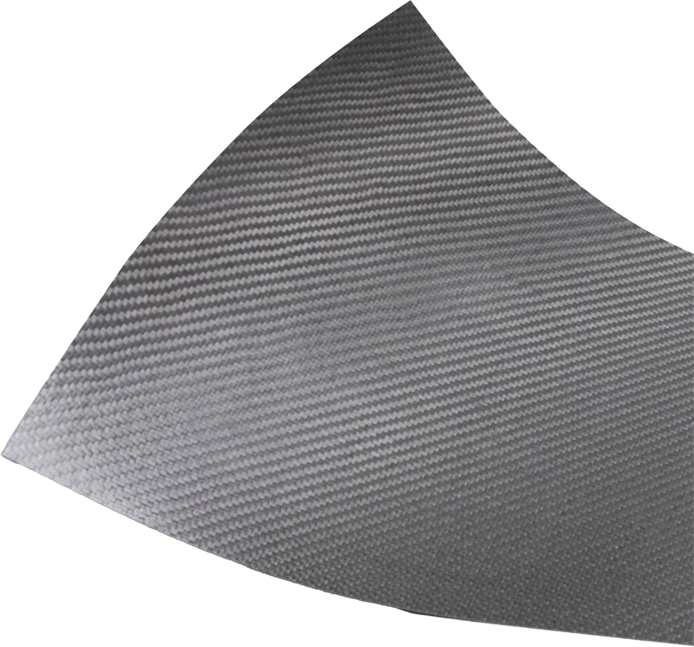
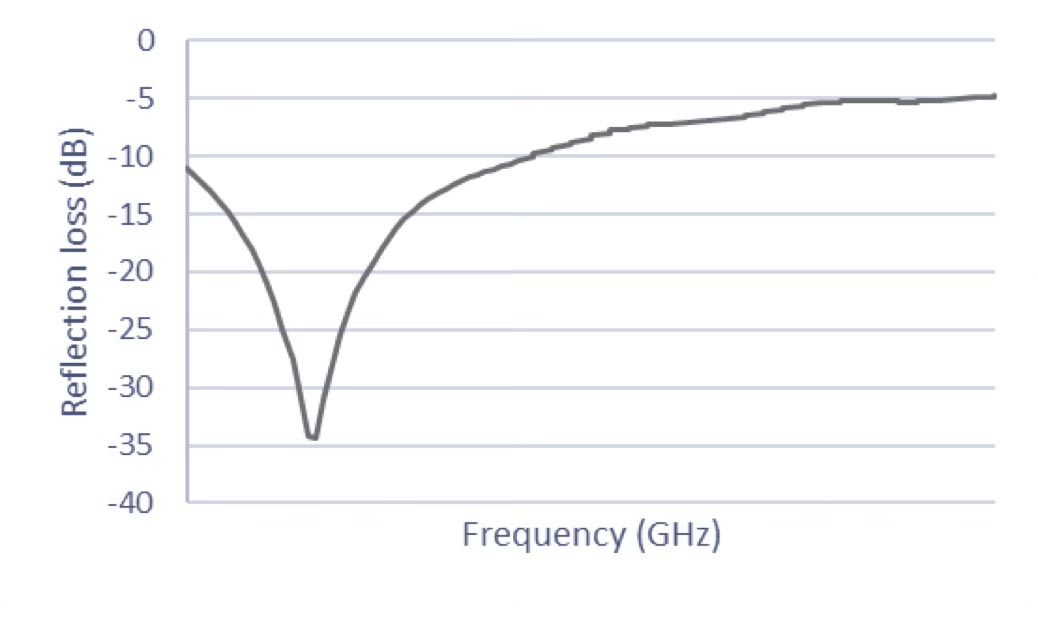
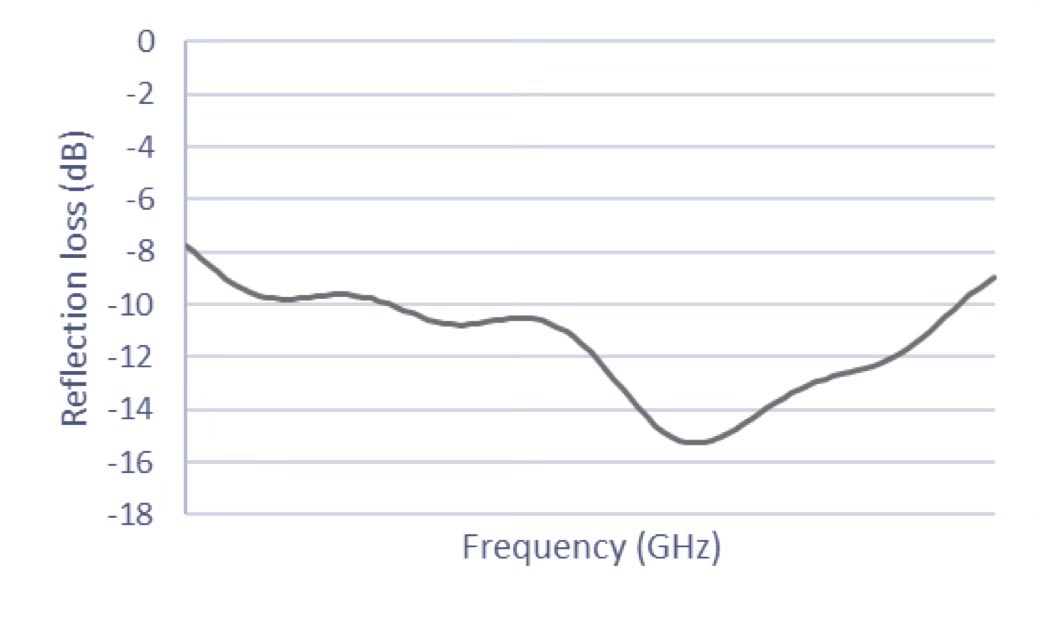
Our special nano-level coatings done at extremely high temperatures impart special characteristics to our materials. Our coating technology offers significant quality and cost advantages in electromagnetic shielding compared to existing technologies such as pure aluminum fibers, aluminum foils or sheets. The coated fibers provide substantial quality and performance advantages due to controlled coating and tunability including various adjustable thickness coatings and thin or thick cores fibers, with nano-materials.